Zevar e Shahzada



As dawn breaks over the Shahi Mahal, the palace awakens to the quiet anticipation of celebration. Beyond the carved jharokhas, the courtyards are fragrant with roses and motia, while attendants prepare the royal chambers. Today, the Shahzada shall ride from the palace in all the splendour befitting his house.
Within his khwabgah, the Prince is dressed for the Darbar-e-Shahi. Upon his richly embroidered sherwani are fastened the Durr-e-Shahi — jeweled buttons, each one gleaming like a small treasure from the imperial khazana. Crafted in the spirit of kundan, meenakari and precious stones, they transform the sherwani from mere attire into the raiment of royalty.
Upon his dastaar is placed the Sarpech-e-Shahzada — the magnificent kalgi, rising proudly above the folds of his turban. Pearls and jewel-toned stones catch the morning light, for the sarpech has long been more than an ornament: it is the crowning flourish of the royal gentleman, worn with shaan, waqar and unmistakable presence.
Across his chest rests the Nishan-e-Darbar, the royal brooch — an exquisite jewel inspired by the insignia and ornaments of princely courts. From restrained elegance to elaborate jeweled forms, each piece is created to lend the achkan or sherwani that final touch of shahi jalwa.
And upon his hand, the Angushtari-e-Shahzada — a statement ring worthy of a prince. Bold stones, intricate settings and old-world forms recall the treasures once kept within imperial jewel chests, where a gentleman’s ring spoke quietly of lineage, refinement and stature.
The great palace doors open.
Outside waits the Shahi Ghora, magnificently adorned for the procession. He mounts the royal horse.
And as the procession begins beneath a shower of rose petals, he does not simply arrive dressed as a groom.
He arrives as a Shahzada.
Zewar-e-Shahzada — where the forgotten splendour of the Mughal gentleman returns to the Darbar.
Zevar e Shahzadi
(Jewels of the Princess)

Zevar-e-Shahzadi — The Adornment of a Princess
Before the first rays of dawn touch the marble jharokhas of the Shahi Mahal, the Shahzadi’s chambers are already awake. The fragrance of motia and roses drifts through the air as her attendants draw aside the sheer pardahs and prepare her for the day’s royal gathering.
Seated before an ornate mirror, the Shahzadi is dressed in ivory and gold, her dupatta falling around her like a veil of light. Yet in the Darbar, her attire is only the beginning. One by one, the treasures of the Shahi Khazana are brought forth—jewels chosen not merely for adornment, but as symbols of her lineage, grace and royal bearing.
Upon her brow rests the Tikka-e-Shahzadi, while the Jhumar-e-Darbar descends gracefully along her hair. A magnificent Nath-e-Shahi frames her face, its delicate chain disappearing beneath the folds of her dupatta.
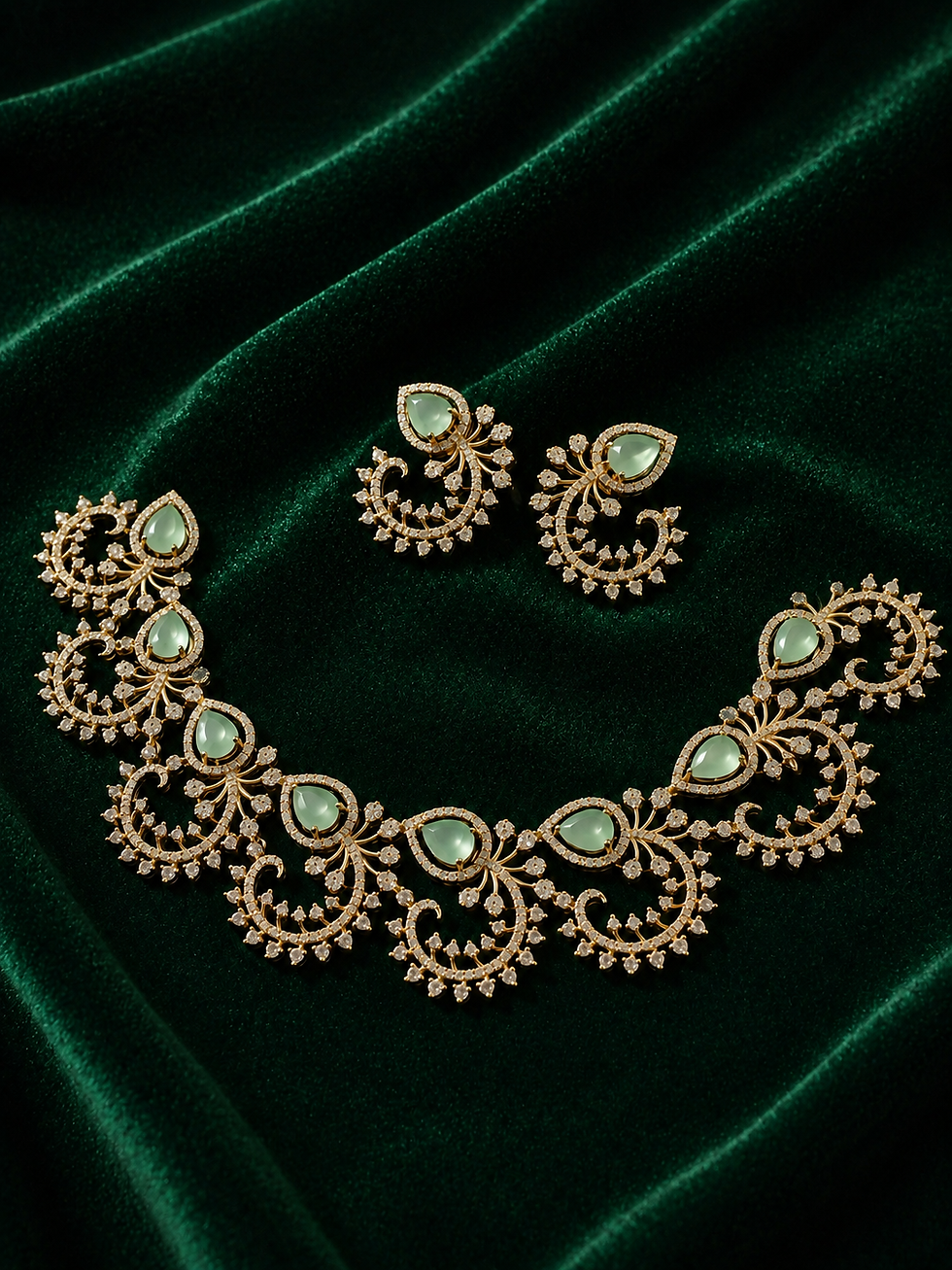
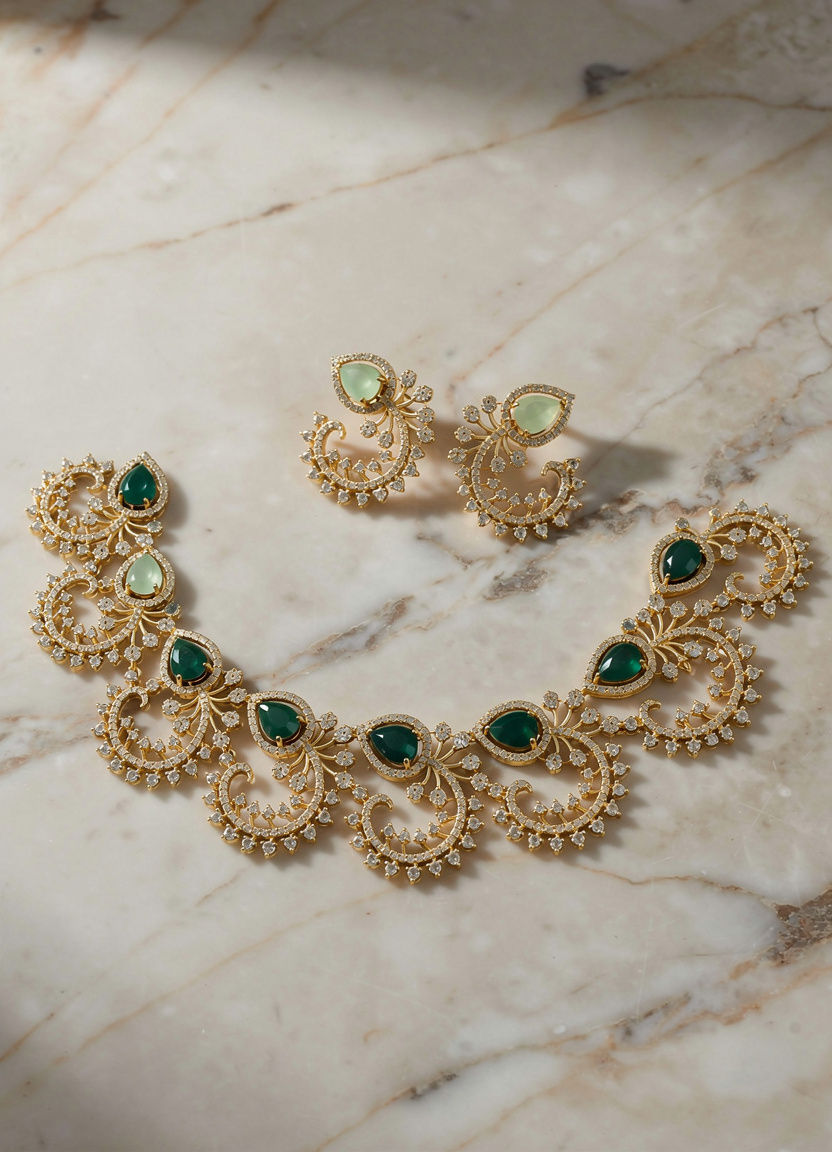
Around her neck is fastened the Guluband-e-Shahi, a jeweled collar worthy of the imperial court. From her ears fall the Goshwara-e-Darbar, accompanied by delicate saharas that sweep upward into her hair.
Her wrists are encircled with Kangan-e-Shahi, and upon her mehndi-adorned hands rest jeweled rings—each finishing touch transforming the young princess into the Shahzadi of the Darbar.
Zevar-e-Shahzadi — where every jewel tells the story of a princess.